Wilkes-Barre, PA · Garage Door Service
Is Your Old Wilkes-Barre Garage Door Worth Fixing
Most Wilkes-Barre garage doors date to the 1938-1985 build era. Here's how to tell if yours is worth repairing or ready to retire, given our cold winters.
- Repairs & new doors
- Springs & openers
- Serving 8 nearby communities
How Local Conditions Play In
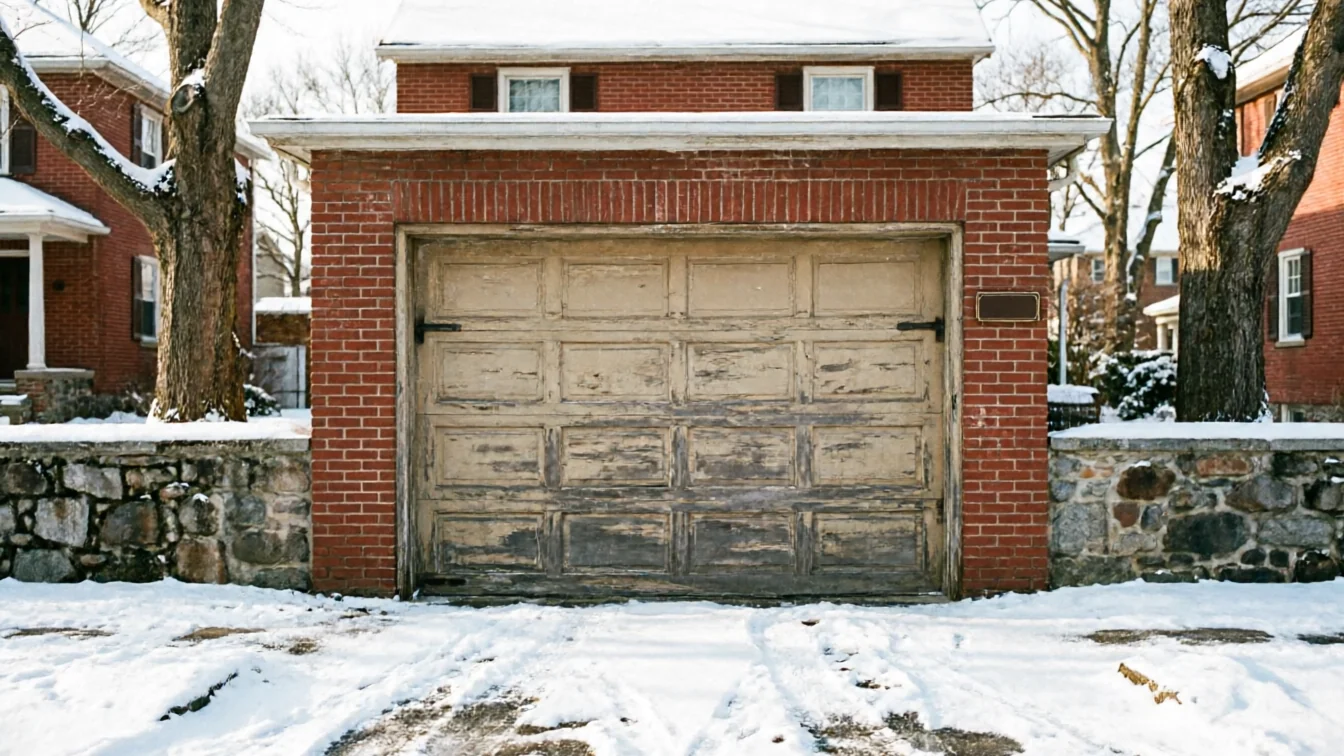
Housing in and around Wilkes-Barre mostly went up between 1938 and 1985, with the median build year landing around 1959. That means a lot of doors on this side of the valley are original equipment or a single replacement removed from original, paired with hardware nobody has made new in decades. The region sits in a cold, severe climate band, which matters more to a garage door than people expect. Steel panels that have gone through sixty-plus winters of freeze-thaw cycling develop rust at the bottom seams and hinge points, and the cold makes old lubricant in rollers and hinges go stiff, which loads extra stress on a torsion spring that's already past its rated cycle count. A door built for a milder climate holds up longer than the same door here. If your panels are original to a 1959-era house, you're not dealing with a door that's simply old - you're dealing with steel and springs that have taken forty more winters of this valley's cold than a door in a newer development a few towns over would have.
When to Call Someone
Call before a small problem turns into a stuck door in January. A torsion spring that's visibly stretched or has a gap when the door is down, a cable that's frayed or off its drum, or a track that's pulled away from the wall are all reasons to get someone out rather than keep cycling the opener. Older doors from the 1938-1985 building stock common here often ran on hardware sized for lighter wood panel doors - if yours has been upgraded to a heavier insulated steel panel at some point without the spring being resized, that mismatch shows up as a door that slams down or an opener straining on every cycle. In a cold-severe climate, that strain gets worse in winter when metal contracts and grease thickens. If the door won't stay up on its own with the opener disconnected, that's a spring problem, not an opener problem, and it's not a safe one to leave for a warmer week.
What Is Going On
On a door this old, the issue is rarely one thing. Original 1950s and 1960s track hardware was built to tolerances that don't match what's sold today, so a worn roller or a slightly bent track section often means the whole run has to come out rather than a quick swap of one part. We see this across the pre-1960 stock that makes up most of the housing here - in Kingston, Edwardsville, Forty Fort, and the other close-in areas, the pattern repeats: original track, replaced opener, and a spring that's due. Rust at the bottom panel seam, common after decades of this area's freeze-thaw winters, weakens the steel enough that a fix to one seam often reveals thinning metal elsewhere on the same panel. That's the point where patching stops making sense and the honest answer is that the panel, not just the part that broke, needs to go.
Leaving It Alone
Some repairs on an older door aren't worth doing, and we'll tell you that instead of billing for them. If a door from the 1938-1985 stock has two or more panels rusted through at the bottom, plus an original low-headroom track setup that doesn't fit any opener made now, replacing the door costs less over five years than a string of patch repairs on hardware that's being sourced used or custom-bent. We won't put a new spring on a door whose track is too far gone to hold it safely - that's money spent on a door that fails again within a season. Where we can fix it cleanly, we will, because a well-built door from this era with sound panels and a resized spring can run another couple of decades without trouble.
Frequently asked questions
My house was built in the 1950s. Is the original door still safe to use?
It can be, if the panels aren't rusted through and the track is intact, but most 1950s doors have had at least one spring replacement by now. Given the freeze-thaw cycling our winters put on old steel and hardware, we'd want to check the spring tension and the bottom panel seams before saying it's fine to leave as is.
Why does my door act up more in winter?
Cold thickens old grease in the rollers and hinges and makes steel contract slightly, which adds load to a torsion spring that's already near the end of its cycle life. In a climate with winters as cold as ours, that extra strain on aging hardware from the 1938-1985 building era shows up fastest in December and January.
How do I know if I should repair or replace?
If the rust or damage is limited to one panel or one piece of hardware and the track is straight, repair usually makes sense. If you've got rust through two or more panels or an outdated low-headroom track that doesn't fit modern openers, replacement is usually the better money over time.
Related garage door services in Wilkes-Barre
More garage door guides
Book garage door service in Wilkes-Barre
Call now or request a quote - tell us what the door is doing and where you are.