Wilkes-Barre, PA · Garage Door Service
Garage Door Roller Replacement for Wilkes-Barre Homes
Roller replacement for Wilkes-Barre's pre-1960 housing stock, where cold-climate wear on original track hardware is the norm, not the exception.
- Repairs & new doors
- Springs & openers
- Serving 8 nearby communities
Why This Fails Locally
Most of the housing stock around Wilkes-Barre went up between 1938 and 1985, with a median build year of 1959, and across the 41 named areas we cover - Kingston, Forty Fort, Larksville, Edwardsville, and the rest - the pattern is the same: pre-1960 construction with original or first-generation garage door hardware. That means steel rollers on narrow tracks sized to doors that are themselves older and heavier than anything built today.
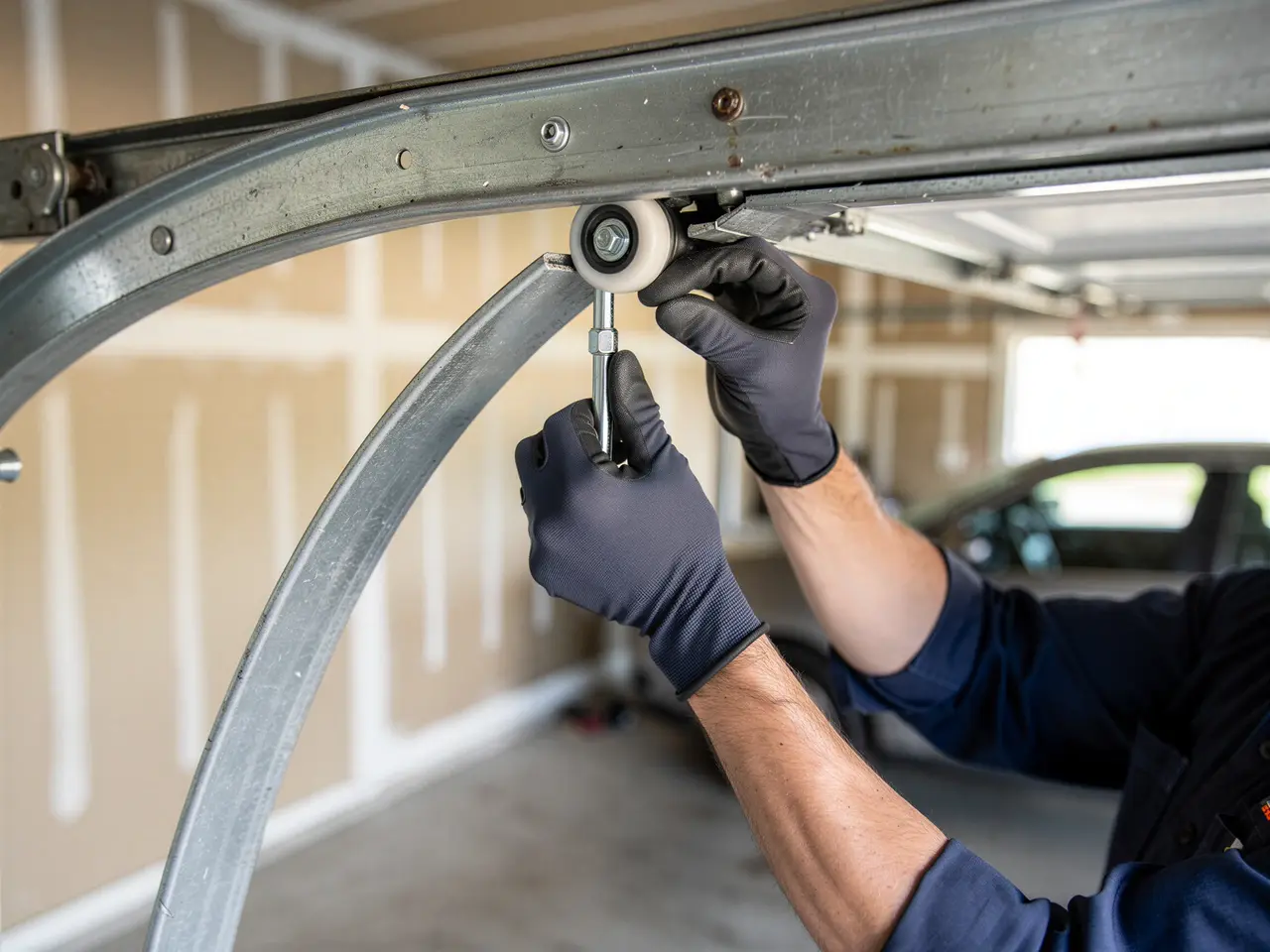
Pair that housing age with a severe cold climate band and you get a specific failure mode. Steel rollers don't flex. When the stem binds in a track that's shifted slightly from decades of frost heave under the slab, or when grease has gone stiff in low temperatures, the roller doesn't glide - it grinds. You hear it before you see it: a rhythmic clunk or scrape as the door travels. On a 1950s or 1960s track, that grinding wears a groove into the rail itself, which then chews up the next roller you put in if nobody addresses the track wear first.
This isn't a defect in how these houses were built. It's just what happens when original hardware outlives its design life by sixty-plus years in a climate that stresses metal every winter. We see it constantly because the housing stock here is old enough that the hardware has simply aged out, not because anyone did anything wrong.
The Cost of This Job
We're not going to quote a number here that doesn't hold up once a tech is standing in front of your door - track wear, roller count, and whether the opener has to come off the rail all move the price. What we can tell you is how the decision usually breaks down for households in this area.
Median household income across the service area sits around $67,482, and most jobs we see are weighed against that household budget, not against a remodel budget. A full roller set replacement on a double door is a different job than swapping two rollers that failed early. If your track shows grooving from years of grinding, replacing rollers alone without addressing the track is a short-term fix - you'll be back in a year.
The honest limitation: if your door is original to a house built in the 1940s or 50s, roller replacement sometimes isn't the end of the job. Track brackets on that hardware are often rusted at the mounting bolts, and once we're in there, replacing the bracket alongside the roller is usually the difference between a repair that lasts and one that doesn't. We'll tell you straight if that's what we're looking at before we start, not after.
What Can Go Wrong
A roller that's worn but still spinning is a nuisance. A roller that's cracked, seized, or has come off its stem is a different problem - it puts uneven load on the track and on the cables above it. Keep running the door on a seized roller and the track bracket on that side takes the strain the roller was supposed to absorb. That's how a $20 part problem turns into a bent track or a pulled-out bracket.
In the cold-climate conditions we work in here, nylon rollers that have gone brittle from years of winter temperature swings can shatter rather than wear gradually. When that happens on a double-wide door, the door can bind hard enough to stall the opener mid-cycle. We've also seen stem rollers that outlast their housing but lose their bearing grease entirely - the roller spins but no longer rolls smoothly in the track, and the door moves in jerks instead of a steady pull.
The risk with any of this on a torsion or extension spring system from the 1950s-60s era is that a binding roller forces the spring and cables to compensate. That's extra load on parts that are themselves at or past the end of a normal service life in houses this old. One worn roller rarely stays an isolated problem for long.
What You Are Seeing
If you're dealing with this right now, here's what it usually looks like before anyone calls us. The door hesitates at the same spot every time, usually a few inches off the floor or right before it seats at the top. You'll hear a scrape or a metallic clunk that repeats once per roller, so a slow rhythmic noise rather than a single bang. Sometimes the door looks like it's walking slightly to one side as it travels, which tells us one side's rollers are further gone than the other.
On older track systems common in this area's 1938-1985 housing stock, you might also notice the door catching right at the curved section of track, where the roller has to turn the corner from vertical to horizontal travel. That curve is where a worn roller binds first, because it's the tightest radius in the whole run.
If your opener is straining, reversing unexpectedly, or you hear the motor working harder than it used to for the same door, that's consistent with roller drag rather than a motor problem on its own. Worth a look before you replace an opener that's actually fine.
Frequently asked questions
How do I know if it's the rollers and not the opener?
If the door makes a repeated grinding or clunking noise as it travels, especially at the same spot every cycle, that points to rollers or track rather than the opener. Openers that strain usually do so because something downstream - rollers, cables, or springs - is adding resistance they weren't built to fight.
Can I replace just the worn rollers and leave the track alone?
Sometimes, yes. If the track is straight and the grooving is minor, new rollers alone can solve it. But on older hardware common in this area, grinding has often already scored the track, and new rollers in a damaged track wear out fast. We check the track before we quote roller-only work.
Does cold weather actually make rollers fail faster here?
Yes. Repeated freeze-thaw cycles stiffen lubricant and make nylon rollers brittle, and track brackets mounted into slabs that have shifted slightly over decades put extra strain on the roller stem. It's a steady wear pattern, not a one-time event.
Is roller replacement worth it on a really old door?
Usually, if the door panels and springs are still sound. Rollers are a low-cost part relative to the door itself. The exception is when track or brackets are also failing - at that point we'll tell you if a full hardware refresh makes more sense than patching one component at a time.
Related services
By Neighborhood
Roller Replacement across the Wilkes-Barre area
We also handle roller replacement in these Wilkes-Barre-area suburbs.
Book garage door service in Wilkes-Barre
Call now or request a quote - tell us what the door is doing and where you are.