Wilkes-Barre, PA · Garage Door Service
Roller Replacement for Mountain Top Garage Doors
Roller replacement for Mountain Top homes built mostly around 1985 - steel-roller original hardware, severe cold wear, and what a visit from Wilkes-Barre actually involves.
- Repairs & new doors
- Springs & openers
- Serving 8 nearby communities
Doing It Yourself
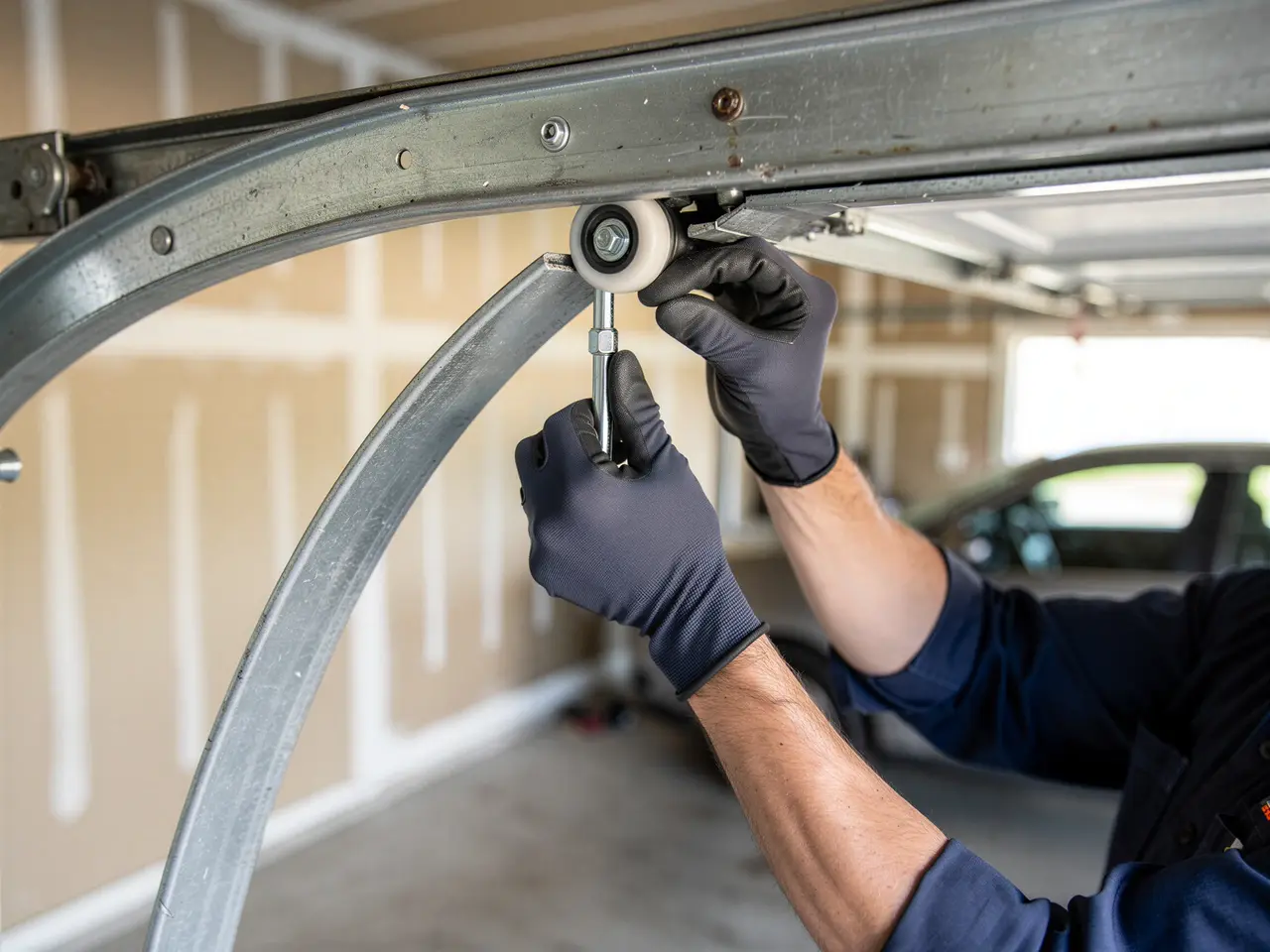
Mountain Top sits eight miles up from Wilkes-Barre, and that drive matters more for this job than it sounds. A roller job is quick once a truck is on site, but it's not a job most owners can knock out with a Saturday and a hardware store trip, because the roller stem length and the track gauge on a 1985-era door aren't the same as what's sold off the shelf for newer builds. If you want to try it yourself: unplug the opener, support the door on its tracks before you pull a bracket, and never touch the bottom bracket on a wound torsion spring. That bracket is under tension and it's not where a first attempt should happen. If a roller has already jumped the track and the door won't move, stop there and call rather than forcing it - a bent track costs more to fix than the roller did.
Getting It Booked In
Because the call travels the eight miles from Wilkes-Barre rather than from a depot in Mountain Top itself, booking works best when you can tell us what you're seeing before the truck leaves: which side is loud, whether the door still runs on the track or has come off it, and roughly how old the door is. With close to 4,450 households up here and a median income around $105,286 - noticeably higher than the $67,482 median across the wider service area - most of the roller calls we get from this side are replacement upgrades rather than emergency track repairs, which changes what we load on the truck before we come up.
What You Are Seeing
Houses in Mountain Top mostly went up around 1985, a good two decades newer than the 1959 median across the rest of the service area we cover. That matters for rollers specifically: doors from this era usually shipped with steel rollers on steel track rather than the nylon-sleeve rollers that came standard later. Steel-on-steel wears differently - you get a grinding or clunking sound before anything visibly breaks, and the roller stem wears oval instead of the roller itself cracking. If your door is making noise on one side only, and the house is original-era, that's almost always a worn steel roller, not a spring or an opener problem.
Time on the Job
Once the truck is up from Wilkes-Barre and parked, a straight roller swap on a double door usually runs under an hour - longer if a track needs straightening because a worn roller finally let the door bind and jump the rail. Add time if the bottom brackets need replacing too; on steel-roller setups from this era, the bracket and roller often wear as a pair, so we check both while we're in there rather than quoting one and finding the other shot halfway through.
Why This Fails Locally
The severe cold common to this part of Pennsylvania is hard on steel rollers in a specific way: grease stiffens, the steel contracts slightly against the track, and a roller that was marginal in fall starts grinding hard by January. On a 1985-built door that's never had the rollers swapped, that's forty years of steel-on-steel wear meeting a cold snap, and it's usually the point where owners finally hear it instead of just feeling a stiff door. It's not a dramatic failure - no cable snap, no spring bang - just a door that gets louder and slower until a roller finally seizes mid-track.
Parts We Carry
We carry the nylon-sleeve roller that most owners end up wanting as a replacement for the original steel ones, since it runs quieter and handles cold stiffening better than bare steel. We don't stock every stem length for every builder-grade door from this era - some of the odder ones are special order, and we'll tell you up front if that's the case rather than bolting on a roller that's close enough but wrong. If the track itself is bent from a roller that jumped it, that's a separate repair, and sometimes it's cheaper to replace a short run of track than to hammer it straight.
Frequently asked questions
Are rollers on a 1985-built Mountain Top door different from newer ones?
Often, yes. Doors from this era commonly came with steel rollers on steel track rather than nylon-sleeve rollers. Steel wears by grinding down the stem and bracket together rather than cracking a roller sleeve, so the failure sounds and looks different - more noise, less sudden breakage.
Do you keep a truck based in Mountain Top?
No. We cover Mountain Top from Wilkes-Barre, about eight miles down the hill. There's no local depot here, so the job itself happens on site once the truck arrives, same as any call from that base.
How do I know if it's the roller and not the spring?
A worn roller usually makes a grinding or clunking noise that gets worse as the door moves, but the door still opens with normal effort. A spring problem makes the door feel heavy or uneven, sometimes with a bang if a spring has already broken. If the door's hard to lift by hand, it's not just the roller.
Will my roller size be in stock?
The common nylon-sleeve replacement roller is stocked on the truck. Some original steel-roller setups on older builder-grade doors use stem lengths that aren't common stock, and those may need to be ordered before the job finishes.
More garage door services in Mountain Top
Book garage door service in Wilkes-Barre
Call now or request a quote - tell us what the door is doing and where you are.