Wilkes-Barre, PA · Garage Door Service
Roller Replacement for Plymouth's 1959-Era Doors
Plymouth's houses went up around 1959, most with steel rollers on steel track. We explain what's failing, what we carry, and what a swap runs from Wilkes-Barre.
- Repairs & new doors
- Springs & openers
- Serving 8 nearby communities
Doing It Yourself
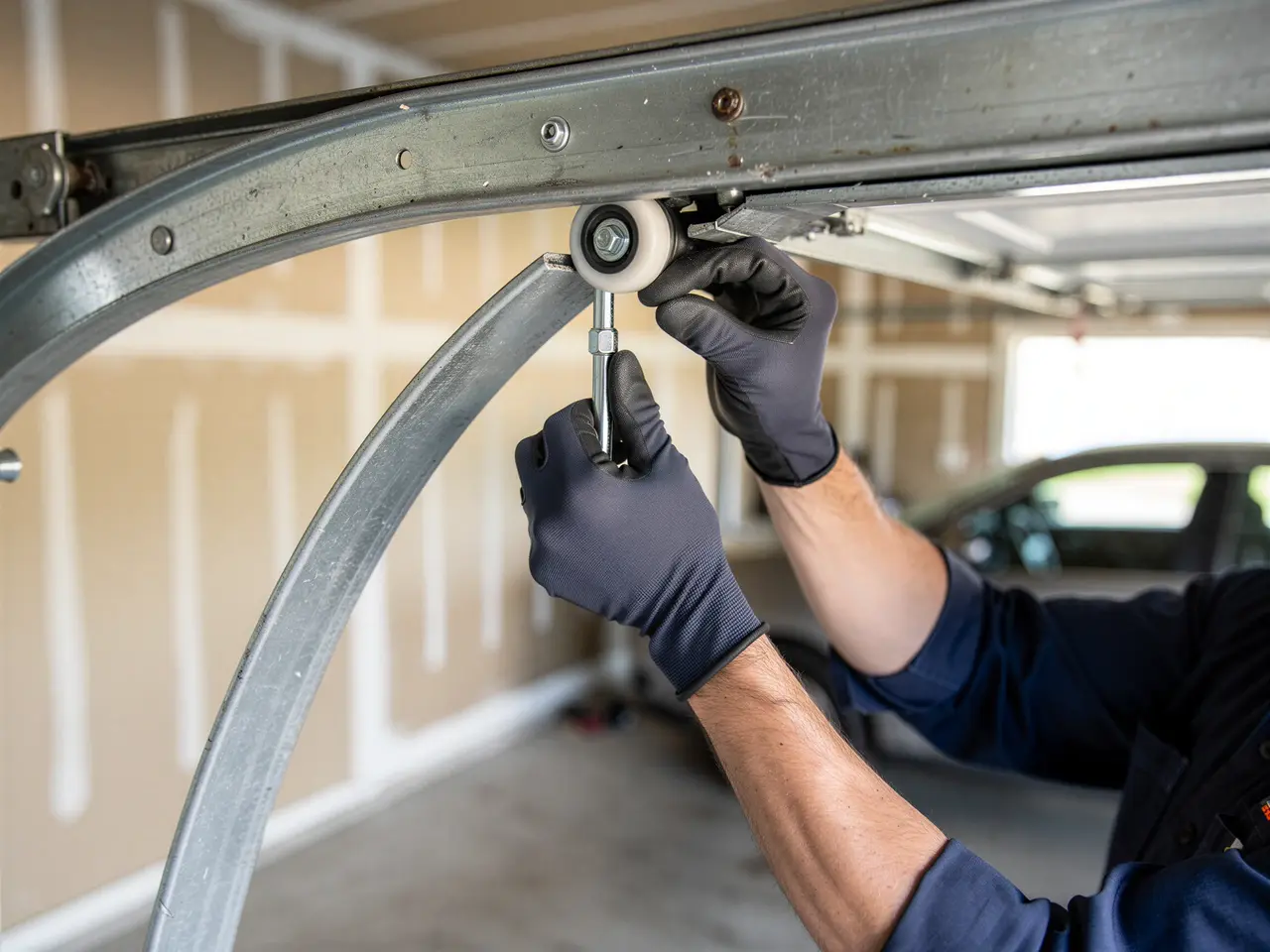
Plymouth's housing stock centers on 1959, and that year matters more than most homeowners realize when a roller starts grinding. Doors from that era were hung with steel rollers riding in steel track, no nylon, no sealed bearings, nothing designed to run quiet for sixty-plus winters. If you're hearing a rhythmic clunk or watching the door chatter at the same spot in the track every time, you're very likely looking at a roller that's worn flat on one side or a stem that's bent from decades of steel-on-steel contact. You can pull the door and look at the rollers yourself - a flat spot or visible rust pitting on the wheel tells you plenty. What you shouldn't do is start removing roller brackets with the door under spring tension. On a 1959-era door, the spring hardware is as old as the rollers, and we've seen homeowners go to pull one roller and end up with a cable off the drum. If the track is bent or the rollers are seized rather than just worn, that's a job for someone who does this daily, not a Saturday project.
What the Fix Involves
Replacing rollers on a door this age starts with checking the track alignment, because steel track that's been flexing against worn steel rollers for decades often has a slight bow where the wear concentrated. We pull the old rollers one at a time, working from the bottom up so the door stays supported, and check each stem for rust and bend before it comes out. On a lot of Plymouth jobs we find one or two rollers failed outright while the rest are just tired - we replace what's worn and leave what's still sound, rather than selling a full set nobody needs. We also check the hinges where the rollers mount, since on steel doors from this period the hinge holes themselves can elongate from years of a rough-riding roller pulling sideways. If the track shows a bow of more than a quarter inch over a section, that gets straightened or replaced before new rollers go in - putting good rollers in bad track just buys you another service call.
Parts We Carry
We stock nylon rollers with sealed bearings as the standard replacement for the steel rollers original to 1959-built doors - quieter, and they don't wear flat the way steel does. For households that want to stay as close to original hardware as possible, we also carry steel rollers, though most owners switch once they hear the difference. Given the region sits in a severe cold climate, we carry rollers rated for the temperature swing rather than a warm-weather stock item that turns brittle in a hard January. One honest limit: if a roller size or a specialty stem turns out to be a discontinued fit from an old track system, that part can take longer to source than a standard call, and we'll tell you that up front rather than quote a same-day fix we can't back.
Time on the Job
A straightforward roller swap on one side of a double door, with no track damage, is a short job - most of the time goes into removing and reinstalling the roller brackets safely with the door under spring tension, not into the parts themselves. Where it runs longer is on Plymouth's older stock specifically: if the track needs straightening or a hinge bracket needs replacing because the hole's worn oval, that adds real time, and we'd rather tell you that before we start than surprise you at the end. We travel the 8 miles out from Wilkes-Barre for this work, so the job itself, once we're on site, is the bulk of the visit - there's no separate dispatch wait built into the quote.
Why This Fails Locally
With a median build year of 1959 across Plymouth, the original hardware on most of these doors has had over six decades of cold-climate cycling - freeze, thaw, salt and road grit tracked into the garage all winter. Steel rollers from that era were never built to run that long, and in a severe cold climate the metal fatigues faster than it would somewhere milder. Plymouth is a small slice of the wider Wilkes-Barre service area - 661 households against roughly 40,562 owner-occupied houses across the full territory - and most of that broader stock shares the same pre-1960 build pattern, which is exactly why steel roller failure shows up as a pattern here rather than a one-off. A median household income of $67,792 in Plymouth is close to the service-area median, so when we quote a repair, it's usually the sensible move over a full door replacement, since the roller is almost never the only thing wrong once a 1959 door starts acting up.
Frequently asked questions
Why do my rollers keep failing when my neighbor just replaced theirs too?
Most houses in Plymouth went up around 1959, so a lot of the original garage doors share the same steel roller hardware. It all aged on roughly the same timeline, and a severe cold climate speeds up the wear, so it's common for several houses on the same block to need rollers around the same years.
Should I replace all the rollers or just the broken one?
Depends what we find. On a lot of 1959-era doors we see one or two rollers failed while the rest are still riding fine. We replace what's actually worn and leave the rest, rather than selling a full set you don't need yet.
Can bent track from old rollers be fixed, or does the whole door need replacing?
Usually just the track section gets straightened or swapped - that's far cheaper than a new door. Full replacement only makes sense if the track damage is extensive or the door itself is failing in other ways, which we'd walk you through before recommending it.
Book garage door service in Wilkes-Barre
Call now or request a quote - tell us what the door is doing and where you are.