
Wilkes-Barre, PA · Garage Door Service
Garage Door Maintenance for Plymouth's 1959-Era Housing Stock
Plymouth, PA has 661 households built around 1959, eight miles from our Wilkes-Barre shop. Here's what maintenance on doors that old actually involves.
- Repairs & new doors
- Springs & openers
- Serving 8 nearby communities
Doing It Yourself
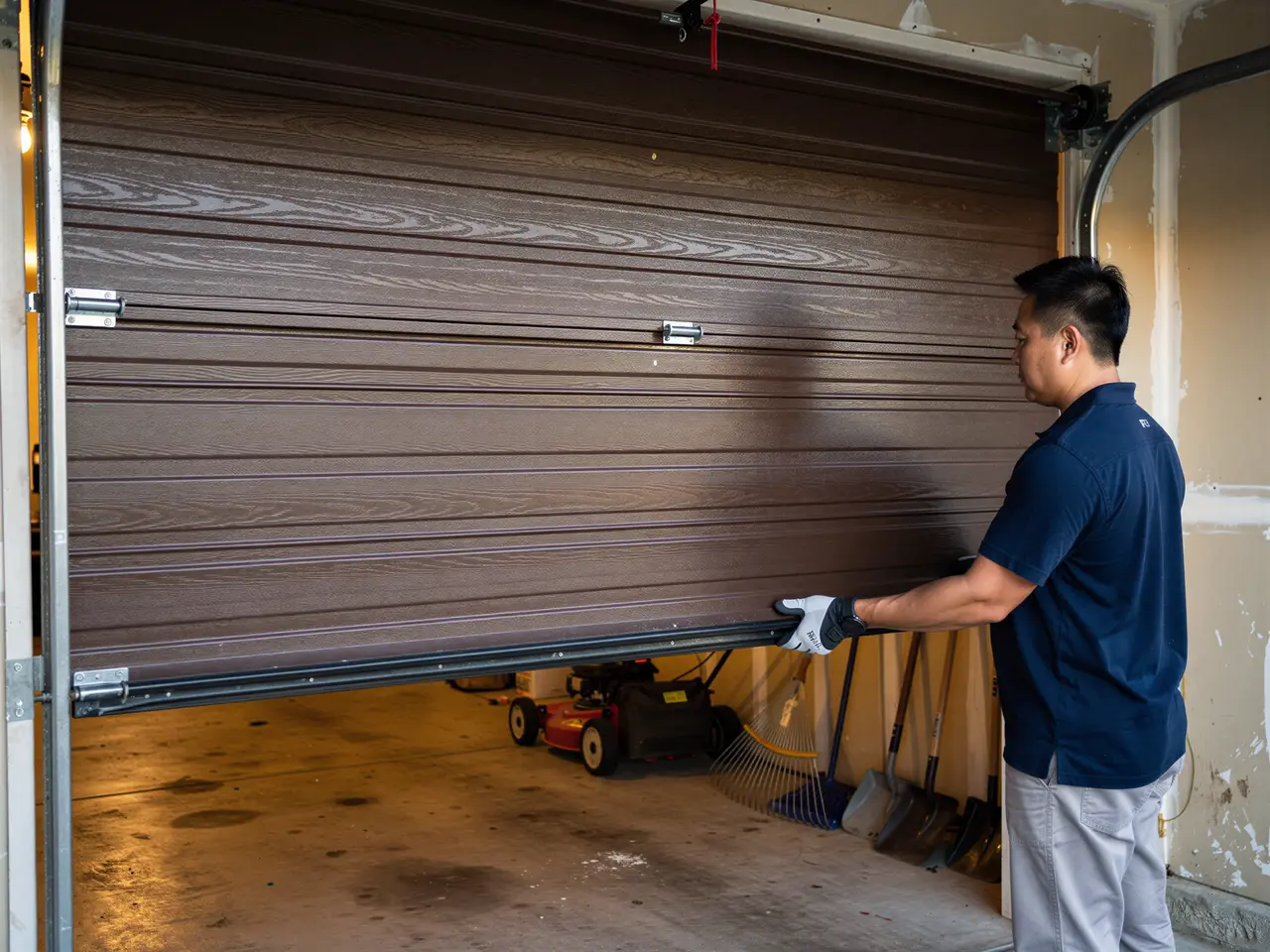
Plymouth is a small borough, 661 households, sitting about eight miles from our shop in Wilkes-Barre. That's not a huge distance, but it's enough that a maintenance visit here is a planned trip, not a drop-in. You can do some of this yourself between visits: wipe down the tracks, check that the photo-eye sensors aren't coated in dust, and look at the bottom rubber seal for cracking before winter sets in. What you shouldn't do yourself is touch the torsion spring or try to adjust cable tension - those are under enough force to break a bone, and on a door built to 1959-era hardware standards, the spring is often original-spec, not a modern retrofit. Lubricating hinges and rollers with the right product (not WD-40, which washes out grease rather than adding it) is worth doing twice a year. Beyond that, a visual check of the lift cables for fraying is reasonable for most homeowners. If you see rust bleeding out of a spring coil or hear a grinding sound from the opener gearbox, that's past the DIY line - call before it fails outright, not after.
What the Fix Involves
Most of our maintenance calls in Plymouth start the same way: a door that still opens and closes but doesn't feel right anymore. The median home in the borough's own numbers was built around 1959, which puts a lot of the housing stock square in the pre-1960 bracket that covers much of this service area. That means original torsion or extension spring setups, older drum styles, and track spacing that doesn't always match what comes in a big-box hardware kit. A real maintenance visit means checking spring tension against door weight, inspecting the drums and cable drums for wear grooves, resetting opener force and limit settings, and checking panel hinges for the elongated screw holes that come from decades of flex. On a door this old, we're often tightening and re-balancing more than replacing - the parts underneath are frequently still sound, just loose or out of adjustment.
Parts We Carry
We stock the torsion springs, rollers, and cable sizes that come up most often on doors from the 1938 to 1985 build window that covers this part of the region. Ball-bearing roller upgrades, standard 1-3/4 inch track hardware, and the common gauge of lift cable used on single and double residential doors all ride on the truck. What we don't always carry is a match for an obsolete panel design or a proprietary opener board from a brand that's stopped making replacement parts - those sometimes mean a short wait on special order rather than a same-visit fix. We'll tell you up front if that's the case rather than quote a job we can't finish that day.
Time on the Job
A standard maintenance visit - spring check, lubrication, hardware tightening, opener adjustment - runs about the same length of time whether the house is in Plymouth or anywhere else on the route, but getting here factors into how we schedule the day. At eight miles out, Plymouth jobs usually get paired with other stops nearby rather than run as a single trip, so booking a day or two ahead works better than asking for the same afternoon. If we find something mid-visit - a cracked drum, a cable starting to fray - we'll tell you honestly whether it's worth fixing now or whether it's a sign the door is closer to the end of its service life than a maintenance budget can fix.
Why This Fails Locally
Plymouth's winters sit inside the same cold, severe climate band as the rest of this service area, and that matters more on a door built around 1959 than on a newer one. Steel contracts in the cold, and on original hardware that's been flexing for sixty-plus years, that contraction is what turns a slightly loose roller into a jumped track at six in the morning when it's fifteen degrees out. Median household income in Plymouth sits around $67,792, close to the broader service area's $67,482 - which tells you most homeowners here are weighing a repair bill against a day's inconvenience, not against whether they can afford either one. The honest answer is that a door this old fails locally for a boring reason: nobody checked the spring tension in a decade, and cold weather found the weak point first.
Frequently asked questions
How often should a door this old actually get serviced?
Twice a year is reasonable for a door from the 1959 era - once before winter, once in spring. The cold-contraction cycle we get in this part of Pennsylvania is harder on original hardware than on newer doors, so catching a loose roller or a worn cable end before it fails matters more here than it does on a five-year-old installation.
Is it worth maintaining a door this old or should I just replace it?
Depends on what we find. If the springs, drums, and track are sound and just need adjustment, maintenance is the cheaper and faster answer. If the panels themselves are warped or the track spacing no longer matches available hardware, we'll tell you that replacement is the better math - we won't keep billing small fixes on a door that's done.
Do you keep a truck stationed in Plymouth?
No. We run out of Wilkes-Barre, about eight miles away, and cover Plymouth as part of the regular route. That means scheduling a visit a day or two out works better than expecting a same-hour call, though we'll always tell you honestly what's realistic for your day.
Book garage door service in Wilkes-Barre
Call now or request a quote - tell us what the door is doing and where you are.