
Wilkes-Barre, PA · Garage Door Service
Roller Replacement for Exeter's 1970s-Era Garage Doors
Exeter's houses mostly date to the 1970s, later than most of the Wilkes-Barre area. That age bracket brings its own roller wear pattern. Here's what we see and how booking works.
- Repairs & new doors
- Springs & openers
- Serving 8 nearby communities
What Can Go Wrong
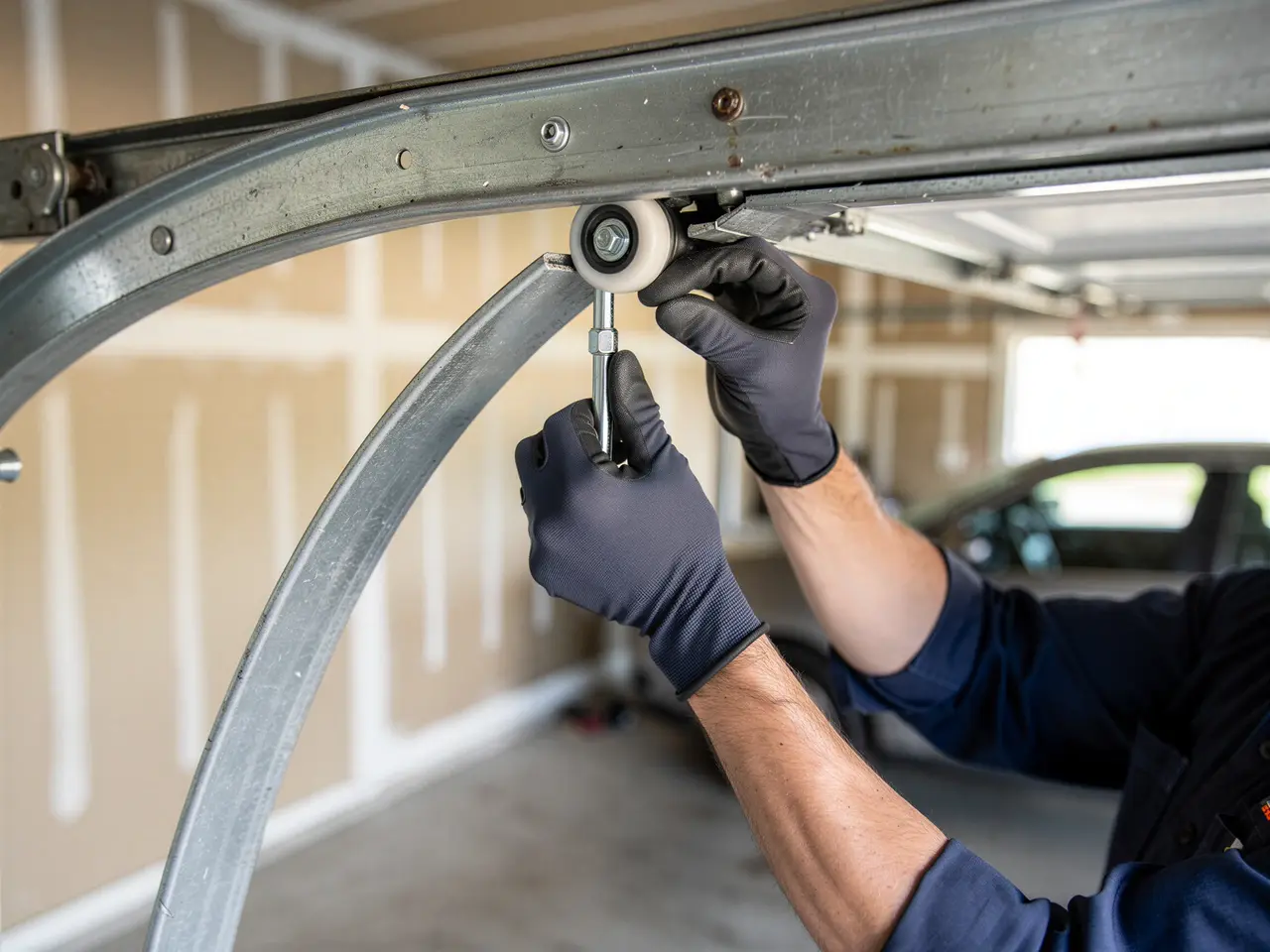
Exeter is a small stop on our route - just over 1,100 households - but it's a distinct one. Most of the houses here went up around 1975, a good fifteen years newer than the 1959 median across the rest of the service area. That matters for rollers specifically. Doors built in the mid-1970s often shipped with steel rollers on steel tracks, no nylon, no sealed bearings. Fifty years on, those steel rollers have usually worn an oval groove into themselves and chewed up the track edges right along with them. You get a door that rattles going up, binds partway, or pulls to one side because one roller is dragging more than the others. On a street of houses built in the same five-year stretch, we tend to see the same failure show up across several driveways at once - it's not coincidence, it's the hardware all aging on the same clock. The fix usually isn't exotic: swap the worn rollers, check the track isn't bent from the dragging, and make sure the spring is still carrying its share of the weight. Where we can't help: if the track itself has worn thin or kinked badly, replacing rollers alone won't quiet the door, and we'll tell you that rather than sell you a roller job that won't hold.
What You Are Seeing
The classic sign is noise that wasn't there a year ago - a grinding or clunking as the door travels, loudest right where the roller meets the track. You might also notice the door hesitating at the same spot on every cycle, which usually means one roller has flattened on one side and is catching. If you can see the rollers from inside the garage, look for a roller that's chipped, cracked, or has a visible flat spot instead of a round edge - on 1970s-era doors that's almost always a steel roller that's simply worn out, not a spring or opener problem. A door that sags slightly at one corner when it's down, or that looks crooked in the opening, often points to the same cause: a roller or two no longer riding true in the track. None of this is an emergency in the way a snapped cable is, but it gets worse with every cycle, and a roller that finally lets go can jump the track entirely.
Getting It Booked In
We run this job out from Wilkes-Barre, about 10 miles up the road, so Exeter isn't a same-day drop-in stop the way it might be for a company based in town - we schedule the visit rather than showing up on short notice. When you call, tell us the age of the house if you know it and what the door is doing (noise, hesitation, crooked travel); that's usually enough for us to bring the right roller type on the first trip instead of a second visit to swap parts. With Exeter's household income running higher than the area median, we also get more calls here for full roller sets across both doors rather than a single patch repair - worth asking about if you're already having one roller done.
Why This Fails Locally
The reason this job looks different in Exeter than it does in the older parts of the service area comes down to the build date. Houses from 1938 through the 1950s, which make up most of the stock elsewhere in the area, were more likely to get one-piece doors or early sectional doors with odd roller stem lengths that aren't stocked anywhere anymore - that's a parts-hunt job. Exeter's 1975 median puts most of its doors squarely in the sectional-door, standard-stem-roller era, which is actually the easier case: the parts are common, the track geometry is standard, and the labor is the main cost, not the hunt for a part. The area also sits in a cold, severe winter climate band, and steel rollers that have already worn a flat spot tend to seize harder and grind louder once the grease stiffens up in January. That's not unique to Exeter, but combined with the age of the stock here, it's why roller calls in this part of the service area cluster in the cold months rather than spread evenly through the year.
Frequently asked questions
Why are my rollers wearing out when the house is only from the 1970s?
Steel rollers on steel track, which is what most houses from that era shipped with, wear down with ordinary use over decades - there's no bearing or nylon surface to absorb the friction. Fifty years of cycles is enough to flatten the roller's edge and groove the track, which is the noise and binding you're hearing now.
Do you have a depot in Exeter?
No. We're based in Wilkes-Barre, about 10 miles away, and we schedule Exeter visits rather than offering a same-day walk-in stop. Call ahead and we'll get a time on the books.
Can you just replace the rollers, or do I need a new door?
Usually just the rollers, since Exeter's doors are mostly 1970s sectional doors with standard roller stems - common parts, no special order. If the track itself is bent or worn thin from years of a dragging roller, we'll say so rather than sell a roller swap that won't fix the noise.
How do I know if it's the roller or the spring?
A worn roller usually shows up as noise and hesitation at the same spot on every cycle, with the door otherwise opening under its own power. A failing spring makes the door feel heavy or unbalanced the whole way, sometimes dropping fast partway through. If you're not sure, tell us what you're seeing when you call.
Book garage door service in Wilkes-Barre
Call now or request a quote - tell us what the door is doing and where you are.