
Wilkes-Barre, PA · Garage Door Service
Keeping Older Doors Running in Forty Fort
Forty Fort sits two miles from our Wilkes-Barre shop, in homes built mostly in the early 1940s - original torsion hardware, worn rollers, tired openers.
- Repairs & new doors
- Springs & openers
- Serving 8 nearby communities
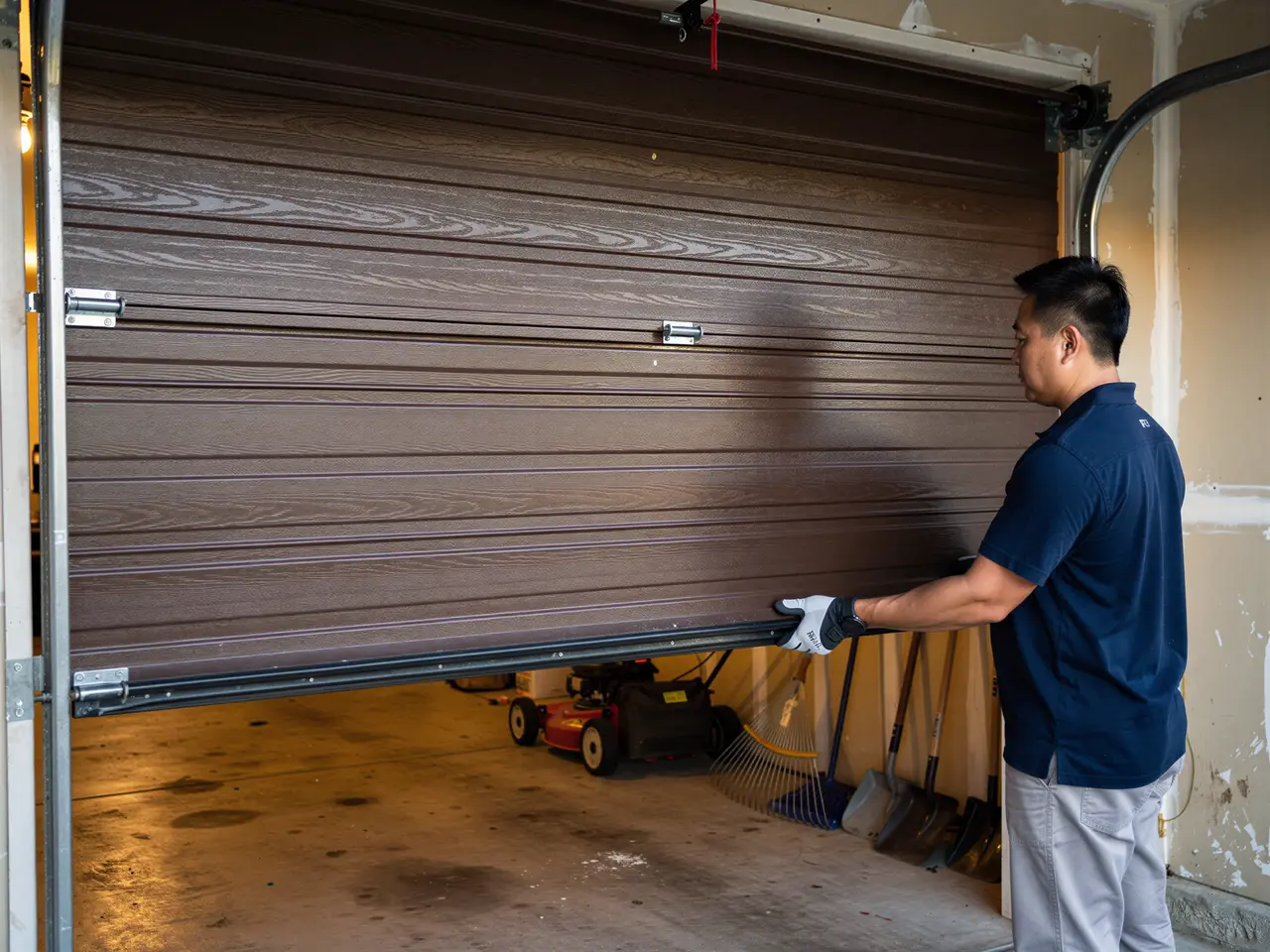
What Can Go Wrong
The run from our shop in Wilkes-Barre to Forty Fort is about two miles - short enough that a maintenance visit doesn't eat a whole morning, but the drive isn't really the point here. What matters once a tech is on site is what's behind the door. Forty Fort's housing stock centers on a median build year of 1941, older than the 1959 median across the rest of our service area. That skews the mix toward original hardware still bolted to the jambs: side-mounted torsion springs, steel tracks that have been repainted more than once, openers swapped in the 80s or 90s and never touched since.
Pair that older hardware with the region's cold, severe winters and you get a predictable pattern of failure. Spring steel loses tension faster when it cycles through hard freezes every year for six decades. Cables fray at the drum where ice and grit work into the strands. Rollers crack instead of just wearing smooth. None of this is dramatic - it shows up as a door that's gotten noisier, slower, or harder to lift by hand over a couple of winters, and by the time it's loud it's usually close to failing outright.
Parts We Carry
On a standard maintenance visit we carry the parts that wear out on schedule: rollers, end bearings, hinges, cable, and lubricant rated for cold-weather cycling. Those cover the bulk of what fails on the pre-1960 doors common on this side of the service area. What we don't carry on the truck is every obsolete bracket or discontinued torsion tube size - some of the original hardware from houses built around 1941 was made by manufacturers that don't exist anymore, and matching an odd-sized drum or a specific jamb bracket sometimes means a short order delay rather than a same-visit fix.
That's the honest limitation: if your door still has its factory hardware from the 1940s, a tune-up visit will tell you exactly what's worn and what's close to failing, but a part that's genuinely obsolete may need to be sourced before we come back to install it. We'd rather tell you that up front than pretend every bracket is sitting in the van. For most doors in this income bracket replacement springs and standard track sections are stock items and go in the same visit.
Getting It Booked In
We don't keep a branch in Forty Fort - every job here is covered from the Wilkes-Barre shop, and at roughly two miles out that's close enough that scheduling a maintenance visit works the same as it would for a street a few blocks from the shop itself. There's no separate dispatch delay built in for this town; it's one of the closer stops on the route.
For a maintenance visit, we check spring tension, lubricate rollers and hinges, inspect cable wear at the drum, and test the opener's force settings and safety reversal. Given the age of the housing stock here, we pay particular attention to torsion spring wear and track alignment, since those are the parts most likely to have drifted out of spec on a door that's been cycling through cold winters since before 1960. If something's close to failing, we'll say so on the spot rather than wait for a second call.
What You Are Seeing
A door that used to lift quietly and now groans partway up is usually telling you a spring is losing tension - common on the original torsion hardware still in place on houses built around 1941. A door that jerks or hesitates at the same spot in its travel every time points to a roller or track issue rather than the spring. Cables that look frayed or have a few strands standing up near the bottom bracket need replacing before they snap, not after.
If your opener runs but the door doesn't move, or moves and then reverses for no reason, that's the force or limit settings drifting - common on openers that are 15 to 30 years old, which fits plenty of the stock in this area. None of these are emergencies on their own, but on older hardware they tend to compound: a worn roller strains the opener, a weak spring strains the cable. Catching one early is cheaper than catching all three at once.
Frequently asked questions
How far out is Forty Fort from your shop?
About two miles from our Wilkes-Barre location. We don't keep a separate branch in Forty Fort, but the distance is short enough that scheduling here works the same as scheduling close to the shop itself.
Why does my garage door need more attention than a newer one?
Forty Fort's housing stock centers on a median build year of 1941, older than most of the rest of our service area. Original torsion springs, tracks, and openers from that era have had decades of cold-weather cycling to wear down, so they need checking more often.
Can you always get parts for an older door the same day?
Usually, yes - rollers, cable, hinges, and standard torsion springs are stock items. Some original hardware from the 1940s was made by manufacturers no longer in business, and matching an obsolete bracket or drum size can mean a short order delay before the second visit.
What does a maintenance visit actually check?
Spring tension, cable wear at the drum, roller and hinge condition, track alignment, and the opener's force and safety reversal settings. On older doors we spend extra time on spring and track wear, since those are the parts most likely to have drifted out of spec.
More garage door services in Forty Fort
Book garage door service in Wilkes-Barre
Call now or request a quote - tell us what the door is doing and where you are.